Category Archives: Reviews

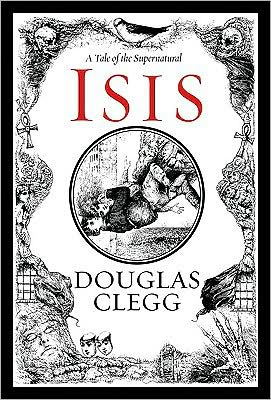
Isis

A chilling retelling of the story of Isis and Osiris, set in Victorian England.

The book is written as if it were a Victorian novel, but with wisps of modern sensibility stealing in here and there.  Iris Villiers is a Gothic heroine with a touch of supernatural power who spends her days trapped on the ancestral estate with nothing to do.   When her beloved brother Harvey dies from falling out a window, she’s willing to pay any price to bring him back from the dead.

You might want to stop reading at the end of chapter seven and pretend that chapter eight doesn’t exist.  Left there, it’s a bittersweet tale of life and death.  The real ending is tragic.  It also wins a prize for scariest use of a locked container ever.

Don’t say I didn’t warn you.

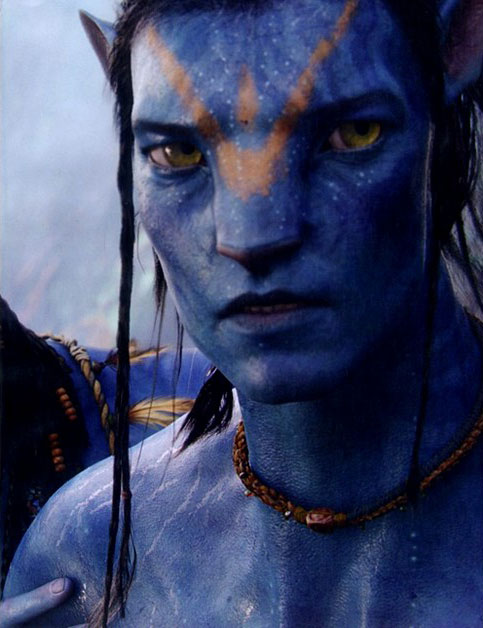
Avatar

No, not that Avatar...

That's more like it.

I had thought, since you can draw pretty much anything given enough CGI these days, that special effects wouldn’t impress me anymore.  After spending two hours and forty minutes with my jaw hanging open, I stand corrected.  Amazing aerial battles, emotionally convincing mocap, and 3D that works.  And the plot is fairly decent for an action/adventure movie.  It’s got slightly more to it than Indiana Jones, more on a par with The Matrix.

Some other notes:

  • Surprisingly fair portrayal of the scientist characters.  Nobody broke out into maniacal laughter once.
  • Dr. Grace (the Sigourney Weaver lady) mentions that she would like to take some samples when she visits the Tree of Souls.  I would like to say that that’s a stereotype.  But if I were in her place, I would have been thinking it pretty hard.
  • The pipettes in the labs are exact replicas of pipettes found in early twenty-first century biology labs.  Who’d have thought it?  Eppendorf must have reached design perfection around 2009 and never changed their products since.
  • Plausible space travel.  The P.A. system informs Jake Sully that he’s been in hibernation for five years.  Factor in the fact that that’s five years from the ship’s point of view, not Earth’s, and you don’t even need to invoke FTL to get to some of the nearby stars.
  • Humanlike aliens: not so plausible.  But they had a good artistic reason to do it – the audience is human, and we need to be able to empathize with them.  I left with the impression that the Na’vi were an ethnicity, not a species.
  • Jake falls in love with the chieftain’s daughter.  Didn’t see that one coming.
  • Colonel Miles Quaritch says something to the extent that “Our only chance at security is a pre-emptive strike.  We must fight terror with terror.”  And the disclaimer says that “All connections to real persons or events is purely coincidental.”  Really, now?
  • Alien invasion movies reflect the zeitgeist of the times.  Perhaps we’re feeling  a bit guilty about environmental destruction?
  • The Avatar system brings up some very interesting questions about the nature of the human soul.  The scriptwriters chose not to go there, but they so could have.

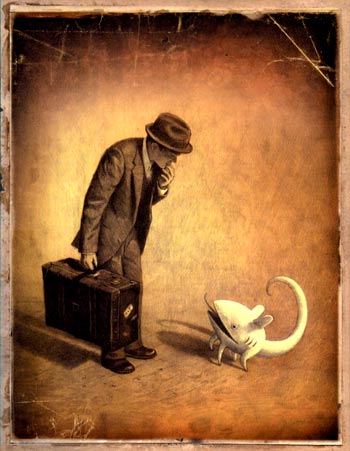
The Arrival by Shaun Tan

A wordless graphic novel that seems to tell the story of an immigrant arriving on Ellis Island, except that this new country is like no place we’ve ever seen before.  Giant crockery dominates the landscape, trollies fly, and people keep strange animal hybrids for pets.  And yet the people in this alien landscape are familiar.  The Arrival is warm and human in the same way that impressed me so much with The Graveyard Book.  To use too many words to describe it would disturb its Zen-like quality; instead, see these excerpts for yourself.

The Arrival has won the New South Wales Premier Literary Awards’ “Book of the Year” prize and the Children’s Book Council of Australia “Picture Book of the Year” award.

Paradise Lost

The English-language literati have been reviewing Paradise Lost for centuries, so I won’t go into that here.  Is Satan a villain or a Byronic hero?  Did Milton intend people to sympathize with the Devil, or is it just a product of our modern anti-tyrannical sensibilities?  Was Milton using it as a vehicle for his anti-monarchist ideals?  It’s all been covered before, and by people who actually know what they’re talking about.

Whatever your position on Christian doctrine, you’ve got to read Paradise Lost for the special effects.  The scope of the story is epic in every sense of the word.  It starts out in Hell as Satan escapes it and flies out into the Void that surrounds the different planes of existence.  It then swings backward in time to the War in Heaven, the creation of the entire universe, scoots past the apple incident, and then flashes forward to the history of all time until the second coming.  If Milton had only been born in the right historical era, Paradise Lost would have been a blockbuster movie with a multibillion-dollar budget, all-star cast, and directed by George Lucas.  It would have been awesome.

During the War in Heaven episode, Satan and his rebel colleagues invent gunpowder in order to take the other angels unawares.  They wheel out these huge triple-barreled cannons and flatten the loyal angels with cannonballs attached to chains.  What do these angels do after literally being made into pancakes?  They pop back into shape and keep fighting.  Because angels are just that cool. That’s not even the end of it – then they scale the war up a notch:

Forthwith (behold the excellence, the power,
Which God hath in his mighty Angels placed!)
Their arms away they threw, and to the hills
(For Earth hath this variety from Heaven
Of pleasure situate in hill and dale)
Light as the lightning-glimpse they ran, they flew,
From their foundations, loosening to and fro,
They plucked the seated hills, with all their load,
Rocks, waters, woods, and, by the shaggy tops
Uplifting, bore them in their hands. Amaze,
Be sure, and terror, seized the rebel Host,
When coming towards them so dread they saw
The bottom of the mountains upward turned,
Till on those cursed engines’ triple row
They saw them whelmed, and all their confidence
Under the weight of mountains buried deep;
Themselves invaded next, and on their heads
Main promontories flung, which in the air
Came shadowing, and oppressed whole legions armed.

You read that right.  Those angels just picked mountains up and threw them at each other.

There are many reasons Paradise Lost would not be appropriate for a 12-year old boy, from its theological subtleties and dense prose, to Satan’s unconventional “family.”  And yet it’s got everything a 12-year-old would love: fire and brimstone, naked people, swords, space travel, God getting all Old Testament on people, and a cool villain.  All it requires to be complete is a cross-dressing sky pirate.

The Tower at Stony Wood


In adventurous stories, there often happens to be this character who knows what’s going on. They’re the one who dribbles out confusing riddles to the hero just as he needs them, and no more. The one who could just tell everybody the big plot secret but won’t, because if that happened the characters could just resolve the story’s conflict and go home. These characters seem to take a perverse enjoyment of their job, reveling in the “Nyah, nyah, I know something you don’t know!” Such a character is the Bard of Skye in Patricia A. McKillip’s Tower at Stony Wood.

The Tower at Stony Wood starts out conventionally enough for a fantasy novel. Cyan Dag, knight of the kingdom of Yves, receives a visit from the Bard of Skye on his king’s wedding night. The Bard gives him a dire warning: the king has just married a monster in mortal form, and his true bride has been trapped in a tower! The book then proceeds like a strange dream. Cyan Dag has no specific instructions from the Bard (nor did he think to ask), so he wanders the countrysides of Yves and Skye at random, trying the towers that he comes across. He’s not the sharpest sword in the scabbard.

Invariably his experiences with towers go something like this: “Thank you! But our princess is in another castle. Please try again.”

Meanwhile, the Bard and her sister send Cyan unhelpful dreams, and in two apparently unrelated plotlines, another man in another tower is attempting to tame a dragon, and a baker and her daughter are in yet another tower watching the whole affair – princess, knight, dragon, and Bard – by magic mirror. I think I counted at least six towers in all in this book. Or maybe they were the same tower, all mystically connected? McKillip is never quite clear on this point.

Cyan and I would both like to grab Ms. Bard by the robe and ask her, “What the dickens is going on here?” There is a partial explanation at the end, but it left me feeling like somebody had just played a card trick on me.

The “Sesame Seed Treat”


Has the Carleton Snack Bar managed to top the doughnuts with the sausages on them?

Perhaps. The photo on the right simply does not do their latest creation justice. Earlier in the week these cups appeared on the Snack Bar shelves, enigmatically labeled “gluten free” and nothing more. Curious (and expecting a pudding), I bought one.

They are sesame seeds suspended in honey.

To be fair, they are sesame seeds suspended in honey, with chocolate sauce and whipped cream on top. But … sesame seeds in honey? Why? Does it have a reputation for health-giving powers? Is it some culture’s traditional dish?

To be fair, nothing about this, er, slurry is gross. It’s tasty, like a spoonful of apricot jam is tasty. Like apricot jam, it would be quite good on toast. But I wouldn’t want to eat a whole cupful of it.

As a matter of fact, after a little Google searching I’ve discovered that the Greeks have a candy called pasteli that is made almost exclusively of sesame seeds and honey. But pasteli is dry and chewy, kind of like a nut roll. Not like a, um … oh, I don’t even know what to call this stuff.

9: Awesome Robot Pterodactyl


Warning: this blog post contains spoilers for the movie 9 (though not the spoiler for the really big secret).

9 does something that a lot of major, well-funded movies are not willing to do: it kills off characters. And it hurts. The MPAA’s rating of PG-13 is appropriate, so brace yourself for a difficult but thrilling ride.

At only 81 minutes, Shane Ackerman’s debut movie does not contain one iota of flab. A machine called the Brain has turned against us and wiped out humanity. The only survivors are nine little hackey-sack dolls. The Brain is still out there. It must be stopped, and it’s going to cost them.

As a matter of fact, the very tightness of the plot is one of the things I have to complain about the movie. 9’s creative team seems to be holding itself back from long, self-indulgent panning shots, but since the movie is so short anyway, I wouldn’t have minded slowing down to wander around in the neat world they’ve created a bit more. Only the major strokes of each doll’s personality are sketched out, and I think there could have been more there if they’d dug deeper.

But who the heck am I kidding? The robot pterodactyl was sweet.

On a technical note, I admire Ackerman & Co’s work at balancing the dolls’ narrative roles. I know from writing that when a bunch of characters have the same job, like members of a crime-fighting team, it’s hard to keep them from interfering with each other. Notice how the movie introduces the characters gradually and never allows all nine of the dolls to be in the same room together just to keep things from getting symmetrical. 3 and 4 are twins, so they have a different relationship to each other than they do to the other teammates, and there’s some factionation going on, so 1 and 8 are closer to each other than to the others.

9 is visually stunning, artistic, but also dismaying. The ending will leave you with a big, “But now what are they going to do?” It’s tempting to compare 9 to Wall-E, since they’re both post-apocalyptic animated films with cute robots for main characters. See Wall-E and then see 9 to cut the sweet, or better yet, see 9 and then see Wall-E to help you recover.

It’s true that the characters in 9 are simplistically done, but I’m still not going to forget 2 for a long time.

Uncle Silas

When Miss Maud Ruthyn, heiress, is orphaned, she’s sent to live with her creepy old uncle until she reaches her majority. Said uncle is suspected of once murdering a man to whom he owed gambling debts. Oh, and if Maud were to die somehow before becoming an adult, Uncle Silas would get everything. Her father arranged it that way in his will to prove to the world that Silas isn’t a murderer. Maud gets the delightful experience of being the pork chop dangled in front of the starving wolf.

Deliciously gothicky, but there’s still plenty wrong with this novel by J. Sheridan le Fanu (better known for his short stories). For one thing, scary it ain’t. “And … there was a bloodstain … on the floor!” is about as intense as it gets. Did the Victorians scare easier than we do, or did the authors just hold themselves back? It’s a depressing prospect to think that we live in a scarier world than in 1899, but compared to Chernobyl, Silas’s murderous history is pretty tame.

Ah, Maud Ruthyn. How I love to hate her. Throughout the book she vacillates between a fainting flower petal and an imperious little brat who knows she’s better than the menials because of her education and good breeding. I know she would have made for an acceptable heroine in the 19th century, but cultural relativism can only be carried so far. I’m still allowed to be upset when she’s denigrating her own gender (The weaker sex? The weaker sex? I do beg your pardon?), failing to play an active role in the ending, or eerily echoing Robinson Crusoe:

‘I want your hand, cousin,’ she said, at the same time taking it by the wrist, and administering with it a sudden slap on her plump cheek, which made the room ring, and my fingers tingle; and before I had recovered from my surprise, she had vanished.

And if you were expecting a twist at the end, which would be reasonable to do in such a suspenseful novel, you will be disappointed. Le Fanu tells you over and over that a certain event is going to happen. And then it happens.

Now that I’ve told you everything that’s wrong with the book, I strongly urge you to go read it. If you’re the sort of person who read Frankenstein for fun, not for English class, you will love it. The point of Uncle Silas is the mood, not its illiberal characters or preposterous plot. The haunted house of Bartram-Haugh abounds with creaky rooms, opium addiction, gypsy prophecies, and … Swedenborgians. Le Fanu is a master of suspense. Just as soon as you’re dying to know what happens next, he slows the story down. He draws out each excruciating moment as the massive conspiracy surrounding Maud closes in on her. I read the last five chapters all at a gulp (nearly making myself late for work) and finished gasping for air. It was only about an hour later that I realized nothing particularly cool happened. Le Fanu just writes it so well. Definitely recommended for any fan of the Gothic style.

Characters and Viewpoint

I’ve been reading a book on craft by Orson Scott Card lately* where he suggests, to make readers hate the villain, to make the villain really, really smart.

This isn’t true in every culture, but certainly the American audience resents any character who is smarter and better educated than other people. … We’re afraid of and resent people who know more than we do, and when they act as if they think it makes them superior to us, we hate them.

That’s sad. Card is probably right, and probably the technique works, but is it right to do it? Tapping into the worst part of people’s natures to make them feel something about a character? He also suggests making bad guys insane to make us hate them.

These are a couple of prejudices that it’s more or less still socially acceptable to have – I certainly couldn’t get away with having a scheming Shylock as my antagonist. But it’s not just that. I also take issue with his lukewarm acceptance of sympathetic, morally ambiguous villains.

When you separate sympathy from moral decisions – exactly what a judge and jury must try to do in a trial – you can’t be sure that your audience will reach the ‘right’ conclusions; you can’t be sure that they’ll agree with you.

What, am I going to hurt my readers’ brains?

Maybe this is why I didn’t like Seventh Son much.

I’d be interested to see what other amateur writers think. How do you build character? Do you add attributes to characters just to make them more evil/heroic, and does it work for you?

* Characters and Viewpoint, in the Elements of Fiction Writing series.