Category Archives: Reviews

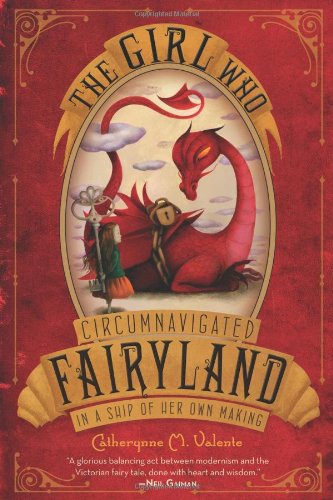
The Girl Who Circumnavigated Fairyland in a Ship of Her Own Making, by Catherynne M. Valente

Wow.

I first discovered Catherynne M. Valente through a short story on the Internet that I cannot, for the life of me, find anymore.  It was a story about a demonness who got kicked out of Hell and plopped into New England long before any European settlers arrived there.  Since she’d been Hell’s baker before, she plies her trade with the mortals as the continent industrializes around her.

The story was dark and complex, just the way I like them.  It’s kind of like Gormenghast, the original Grimm’s tales before they got bowdlerized, and Gothic horror.  So I decided to pick up Valente’s latest novel, The Girl Who Circumnavigated Fairyland in a Ship of Her Own Making.  It’s a quick read.

At first I thought, oh, okay, Valente’s taking a break from her dark stuff to write a fluffy book.  The story starts off with a girl named September, who grows bored with her life in Omaha, Nebraska and gets whisked off to Fairyland on a green wind.  Hijinks ensue as she makes friends with a Wyverary and a Marid and gets tasked with stealing a spoon from an evil Marquess.  But then the story gets darker, and darker, until you realize that it’s not a fluffy book at all.  I won’t tell you the kicker of an ending, but I’ll share with you my favorite passage from the book:

Of course not.  No one is chosen.  Not ever.  Not in the real world.  You chose to climb out of your window and ride on a Leopard.  You chose to trade your shadow for a child’s life.  You chose not to let the Marquess hurt your friends – you chose to smash her cages!  You chose to face your own death, not to balk at a great sea to cross and no ship to cross it in.  And twice now, you have chosen not to go home when you might have, if only you abandoned your friends.  You are not the chosen one, September.  Fairyland did not choose you – you chose yourself.  You could have had a lovely holiday in Fairyland and never met the Marquess, never worried yourself with local politics, had a romp with a few brownies and gone home with enough memories for a lifetime’s worth of novels.  But you didn’t.  You chose.  You chose it all.  Just like you chose your path on the beach: to lose your heart is not a path for the faint and fainting.

The Eleventh Plague by Jeff Hirsch

Hello, everyone.  Today Carrie Slager from The Mad Reviewer is doing a guest post on The Eleventh Plague by Jeff Hirsch.

(Cover picture courtesy of Midnight Bloom Reads.)

Sometimes the only way to survive is to keep moving.  America is a vast, desolate landscape left ravaged after a brutal war.  Two-thirds of the population are dead from a vicious strain of influenza.  People called the sickness the eleventh plague.

Fifteen-year-old Stephen Quinn was born after the war and only knows the life of a salvager.  His family was among the few who survived and look to roaming the country in search of material to trade.  But when Stephen’s grandfather dies and his father falls into a coma after an accident, Stephen finds his way to Settler’s Landing, a community that seems too good to be true.  There Stephen meets Jenny, who refuses to accept things as they are.  When they play a prank that goes horribly wrong, chaos erupts, and they find themselves in the midst of a battle that will change Settler’s Landing—and their lives—forever.

I know what you’re thinking: male protagonist + mysterious plague = zombies.  That’s what I thought too, but I was mercifully wrong.  It’s not that I don’t like zombies, but they are definitely overused.

The Eleventh Plague is different from a lot of the speculative YA you see on the shelves right now.  The biggest difference is that there’s a male protagonist, but there are more subtle differences as well.  Jeff Hirsch has actually paid attention to world politics and invented a plausible scenario for how the plague started and why civilization in America is basically non-existent in his novel.  He shows us how some people adapt well to the new world where the only skills that matter are survival skills, but he also shows us people like Isherwood Williams from Earth Abides who try to keep civilization alive by educating the next generation.  It’s an interesting contrast and the main character Stephen is torn between both sides.  On one hand he loves reading, but on the other his grandfather told him repeatedly that it was useless and a waste of time.

Stephen is a great character readers can sympathize with.  He’s tough and goes through a lot during the course of the novel, but he also has a more tender side which we see when he falls in love with Jenny.  For those of you already cringing at the mention of yet another teenage romance, never fear!  It is not the focus of the novel and it certainly is unconventional.  Jenny is also an excellent character in her own right and although she may seem like the typical tough rebel at first, her backstory makes her personality a lot more believable.

I wouldn’t call the plot of The Eleventh Plague on-the-edge-of-your-seat thrilling, but it does move along quite nicely and Jeff Hirsch never got bogged down in excessive descriptions.  It has some great plot twists and the ending isn’t exactly happy, but it’s not tragic either.  Some say the ending isn’t satisfying at all but I liked it because it stayed true to the characters.  That, for me at least, is far more important than a fairytale ending.

I give this book 4.5/5 stars.

Amazon     Barnes and Noble

Gunnerkrigg Court by Tom Siddell

Image courtesy of gunnerkrigg.com

Yes, Gunnerkrigg Court is about the lives of some students at a special boarding school tucked away in the hinterlands of the U.K.  But no, it’s not just a remix of Harry Potter.

Gunnerkrigg Court is a three-times-a-week webcomic by Tom Siddell that’s been running since 2005.  Our heroine is Antimony Carver, who has been sent to the Court on her mother’s dying wish.  As soon as she arrives, strange things start to happen.  There is magic, yes, but this Court isn’t a place where cute little kids learn how to become witches and wizards.  Quite the opposite: Antimony’s at a tech school.  The magical creatures in the forest that surround Gunnerkrigg Court resent the school’s presence, and the two have been in a state of cold war for centuries.

When Antimony tries to interfere with the strange happenings at the Court or in the forest, she often makes things worse.

Start reading the strip from the beginning and play close attention.  Siddell is a master at setting plot elements up far in advance, maintaining them through years’ worth of strips, and then bringing them together for a payoff that was the last thing you expected.  That shadow and that robot from the very first chapter?  They’re important.

The best thing about this strip is its complexity.  Sure, it’s funny.  It’s about a bunch of teenagers and their awkward love lives.  But it can get pretty damn scary sometimes and deep at other times.  There are no characters here who are wholly good or evil, and there’s probably more to all of them than you think.

The Search for WondLa by Tony DiTerlizzi

The Search for Wondla (by Tony DiTerlizzi of Spiderwick Chronicles fame) originally drew my eye because of the lush, art-noveau-inspired illustrations throughout the book.  All the pictures of wacky aliens remind one of the first editions of the Wizard of Oz series from the early 20th century.  There’s a good reason for that, but I won’t spoil it for you.

The plot itself is decent enough.  Our heroine is Eva Nine, an 11-year-old girl who’s been raised by a caretaker robot in an underground bunker all her life.  The story gets off to a slow start because Muthr, the robot, is as dull as plain toast.  Things get much better around pg. 68, after Eva has left her bunker and met her first cool-looking alien, Rovender Kitt.

Eva, Rovender, and Muthr set out on a quest to find more members of the human race.  On the way they find all sorts of strange creatures that are definitely not human.  It turns out there’s good reason Muthr’s so stodgy at the beginning.  She has a lot of character development to do over the book.  Rovender, too, has his depths.  I don’t think DiTerlizzi fully captured Eva’s 11-year-old mind, though.  There’s nothing exactly wrong, but Eva ain’t no Lyra Silvertongue.

The Search for WondLa isn’t going to change the face of YA lit as we know it, but it was an enjoyable read.

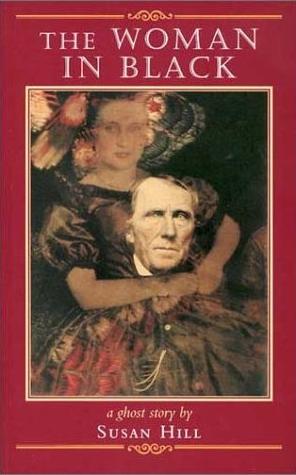
The Woman in Black by Susan Hill

I guess scary books just don’t scare me.

The Woman in Black tells the tale of Arthur Kipps, a young solicitor who has been sent to the north of England to tidy up the affairs of old Mrs. Drablow.  Despite warnings from all the townsfolk that Mrs. Drablow’s house is haunted, the fool decides to spend the night.  Terrible things ensue.  The book inspired a movie starring Daniel Radcliffe that is a scary, scary movie that I never want to see.

The book, however … reminds me of the limitations of the print medium.  Books don’t do jump scares very well.  Sure, the apparition of the woman with the wasted face would have been pants-soilingly scary to Arthur Kipps, but for me the reader the filter of words has taken away most of the terror.  It read more like a delicious neo-Victorian novel.  I luxuriated in the descriptions of social class, the autumn winds over the British moors, and above all the long sentences with multiple dependent clauses.

To me, scary movies are way scarier than scary books.  The Turn of the Screw?  Eh.  Rosemary’s Baby?  Beloved?  Didn’t faze me.  But if I ever see a weeping angel in a dark alley oh god oh god oh god…

Red Mars, by Kim Stanley Robinson

What happens when you take the best and brightest of Earth’s biologists, engineers, computer scientists and geologists, and coop them up in a tiny habitat on Mars together?  They begin to hate each other with a passion, that’s what.

Red Mars is a fascinating study of what happens to society when we decide it’s time to colonize Mars.  The science of the book is rock-hard.  The first one hundred colonists make their agonizingly slower-than-light journey out to the red planet, and Robinson seems to have done his homework on every other aspect of the colonies: from physics to biotechnology to sociology.  And yet against the backdrop of all this plausible science, the story is character-driven.

Each of the first one hundred colonists who we get to meet has a unique character.  Maya Toitovna, leader of the Russian delegation of colonists, is a twit.  And yet, when times get tough, she gets tough, too.  John Boone is pretty much Buzz Lightyear, charismatic and arrogant.  Nadia Cherneshevsky is the badass engineer who solves problems.  And Frank Chalmers: oof.  The chapters that take place inside Frank’s head are some of the creepiest parts of the novel.  Never have I seen a man so pathologically out of touch with himself.

Each of these early colonists is witness to an epic span of time as Mars fills with people, political unrest and finally insurrection begins.  The end of Red Mars is not the end of the story (it’s part of a trilogy) and I fully intend to read the rest.

P.S.  Though most of the science in this book is excellent, there is one mistake that I found quite amusing.  In Kim Stanley Robinson’s 2026, the Internet is a very boring place.  It’s a handful of message boards that scientists sometimes use to share data.  Nobody thinks of using it for mass media purposes when politics get rough or even to sabotage it.  This in a world that has AI’s and omegendorph, a wonder drug.  Still, the book was written in 1993, so you have to give Robinson credit for even imagining that we will use the Internet in the future.

Triangle

Source: highlycontrasting.com

A 2009 psychological horror movie that was directed and written by Christopher Smith.  Jess, a waitress who’s struggling with raising an autistic son alone, is invited by her friend Greg to spend a day sailing off the coast of Florida with a few other people.  A mysterious storm wrecks their sailboat, then a mysterious ship called the Aeolus appears and everyone boards it.  Without giving away any spoilers, bad stuff happens.  And time travel.

The ending of the movie was chilling, but fifteen minutes later I began to notice holes in the plot that are ruining it for me.  Please, if you’ve seen the movie, can you explain the following?

.

(Everything that follows is a spoiler.)

.

.

  • Where did the time loop come from?  Jess is influenced to do a lot of things she does because of her future self.  But the first time she boards the Aeolus, her future self wouldn’t exist … right?
  • When Jess-with-a-sack attacks Jess-with-no-sack, Jess-with-no-sack wins.  So when Jess puts the sack on, she should still remember that she’s going to lose that fight.  So why does she attack Jess-with-no-sack?  Did she want to get thrown overboard?
  • If getting thrown overboard lets you escape the Aeolus, why doesn’t Jess just jump off?
  • Wouldn’t the weight of all the lockets and dead Sallys eventually sink the ship?
  • Is that creepy taxicab driver at the end Charon?

Some Thoughts on Steampunk

Happy Fourth of July, everybody!

The other day I was cruising about The Mad Reviewer, Carrie Slager’s very prolific book review blog.  If you haven’t seen this blog before, check it out.  If a YA book exists, chances are that Carrie has read it and has something to say about it.  I asked her what she thought about the recent trend of steampunk books, and she replied with this guest post:

.

.

So Margaret asked me: “Hey what is your opinion on the sudden hotness of the steampunk genre?  Do you thin kit’s going to last?  I remember having a conversation with some friends last year, and they said that the problem with steampunk is that nobody’s written anything serious in the genre, only frivolous books.  Could you write a blog post about that?”

Why yes I can, Margaret.  Yes I can.

Do you guys remember when pundits were predicting the death of the Western?  How about science fiction?  Fantasy?  Historical fiction?  Romance?  The book itself?  My point is that although so-called experts have predicted the disappearance of practically every genre, they’re still here.  Steampunk is definitely a fascinating sub-genre and I suspect that it’s here to stay, no matter what literary experts say.

However, that’s not to say the trend won’t cool off.  Genres go through trends, just like music, movies, clothes, you name it.  Steampunk is on a current high, but it will drop as people tire of it and move on.  Remember the huge paranormal romance craze after Twilight’s success?  That’s mostly died down now and general fantasy and steampunk have replaced it temporarily.

Contrary to what some of Margaret’s friends and many pundits seem to think, steampunk is  a serious genre.  As for the claim that no one has written anything serious, define ‘serious.’  If you definite serious as ‘a sweeping epic that questions our fragile mortality and the futileness of it all in a Margaret Atwood-esque style’, then you won’t find anything mainstream, let alone steampunk.  However, if you use a less narrow definition like ‘it’s meant to entertain and may or may not impart some important life lessons’, then yes, there is a high volume of serious steampunk.

Take Scott Westerfeld’s Leviathan trilogy, for example.  It’s set in an alternate version of 1914 Europe and I really don’t think there’s anything not serious about how the First World War started.  Alek and Deryn, the novel’s two main protagonists, are serious characters because they get into very real danger and suffer very real consequences.  There may not be many grand themes you can over-analyze in typical novel study-like fashion, but that doesn’t mean they’re not serious books.

So yes, steampunk will cool off but it’s here to stay and yes, it is a serious genre.  Literary snobs and my fellow self-appointed critics, you may begin writing your hate mail now.

The Russia House by John le Carré

John le Carré is the celebrated author of over a dozen spy novels (including the likes of The Constant Gardener), but there’s certain spy elements that you won’t find in his books.  You won’t find any guy in a tux whipping out a one-liner before he blasts his way out of a supervillain’s death machine.  These are not that kind of spy books.  John le Carré (not his real name) has worked for both MI5 and MI6, and his books reflect what spying is actually like.

The Russia House is not le Carré’s most famous work, but it was my introduction to him because a friend of mine recommended the book.  Barley Scott Blair is the manager of a bankrupt publishing company and borderline alcoholic.  On a publicity trip to Moscow, he says and does a chain of wrong things and winds up embroiled in an espionage scheme.  British intelligence has to figure out how to harness him to learn more about the Soviet missile program – and how to keep Barley on a leash.

What I found most interesting about this book was that it captured the zeitgeist of the late Cold War.  I’m a millennial, so the U.S.S.R. collapsed when I was a baby.  There has only ever been one Germany to me.  What was living through the Cold War like?  Le Carré does a vivid job of capturing the moribund U.S.S.R., the mutual resentment between the U.S. and Britain, and the constant, low-level paranoia that we are going to make ourselves go kablooie.

There are only gray characters in this book.  Everybody has a reason they want something out of Barley, and nobody is a knight in shining armor.

Another neat thing, which is really just an aside – you know how in English class you always learn about how The Great Gatsby is an example of a displaced protagonist?  Gatsby is the main character of that story, but the story is told by Nick Carraway.  Then the English teacher comes up dry trying to think of another example.  The Russia House is another one of these rare stories.  Barley Scott Blair is the main character, but the narrator is Palfrey, a legal advisor to the the British intelligence agency that’s trying to keep Barley in check.  Try bringing up that factoid in English class.

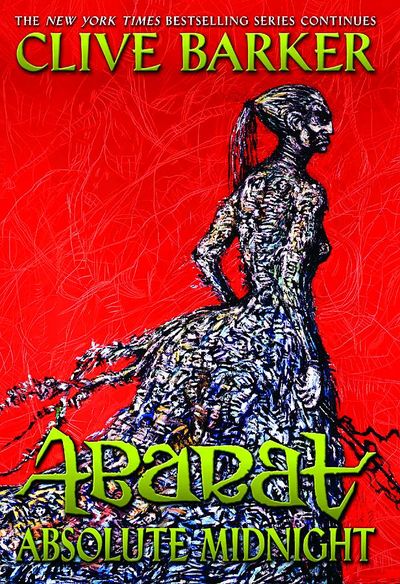
Abarat: Absolute Midnight

Ever since the second book of the Abarat series was published in 2004, I’d been eagerly awaiting the arrival of its sequel.  For those who aren’t familiar with the books, let me tell you that the Abarat series is a strange beast: kids’ stuff by Clive Barker.  Yup.

Barker held back a bit with the weird and creepy stuff for the first two books as he told the story of Candy Quackenbush, a girl from Minnesota who finds a portal to a magical dimension.  But in the third one, Abarat: Absolute Midnight, all Hell breaks loose.  I can’t really describe the plot to you.  In third books of five-book series, plots are hard to describe.  But in a nutshell an apocalypse has come to Candy’s Abarat.

We haven’t just got Mater Motley now.  We’ve got eldritch abominations fighting other eldritch abominations.

Highlights include the gorgeous, Barkeresque language, the full-color illustrations every few pages, and Rojo Pixler, who’s like every creepy rumor you’ve heard about Walt Disney.

Romantic spoiler alert: Who the heck is Gazza?  He shows up halfway through the book and instantly he and Candy fall in love with each other.  I was rather rooting for Candy/Malingo.  Although it would have been disturbing, Candy/Carrion or Candy/Finnegan Hob would have made for an interesting story, too.